This is how democracies die

Defending our constitution requires more than outrage.

by  and 

Blatant dictatorship – in the form of fascism, communism, or military rule – has disappeared across much of the world. Military coups and other violent seizures of power are rare. Most countries hold regular elections. Democracies still die, but by different means.

Since the end of the Cold War, most democratic breakdowns have been caused not by generals and soldiers but by elected governments themselves. Like Hugo Chávez in Venezuela, elected leaders have subverted democratic institutions in Georgia, Hungary, Nicaragua, Peru, the Philippines, Poland, Russia, Sri Lanka, Turkey and Ukraine.

Democratic backsliding today begins at the ballot box. The electoral road to breakdown is dangerously deceptive. With a classic coup d’état, as in Pinochet’s Chile, the death of a democracy is immediate and evident to all. The presidential palace burns. The president is killed, imprisoned or shipped off into exile. The constitution is suspended or scrapped.

On the electoral road, none of these things happen. There are no tanks in the streets. Constitutions and other nominally democratic institutions remain in place. People still vote. Elected autocrats maintain a veneer of democracy while eviscerating its substance.

Many government efforts to subvert democracy are “legal”, in the sense that they are approved by the legislature or accepted by the courts. They may even be portrayed as efforts to improve democracy – making the judiciary more efficient, combating corruption or cleaning up the electoral process.

Newspapers still publish but are bought off or bullied into self-censorship. Citizens continue to criticize the government but often find themselves facing tax or other legal troubles. This sows public confusion. People do not immediately realize what is happening. Many continue to believe they are living under a democracy.

Because there is no single moment – no coup, declaration of martial law, or suspension of the constitution – in which the regime obviously “crosses the line” into dictatorship, nothing may set off society’s alarm bells. Those who denounce government abuse may be dismissed as exaggerating or crying wolf. Democracy’s erosion is, for many, almost imperceptible.

How vulnerable is American democracy to this form of backsliding? The foundations of our democracy are certainly stronger than those in Venezuela, Turkey or Hungary. But are they strong enough?

Answering such a question requires stepping back from daily headlines and breaking news alerts to widen our view, drawing lessons from the experiences of other democracies around the world and throughout history.

A comparative approach reveals how elected autocrats in different parts of the world employ remarkably similar strategies to subvert democratic institutions. As these patterns become visible, the steps toward breakdown grow less ambiguous –and easier to combat. Knowing how citizens in other democracies have successfully resisted elected autocrats, or why they tragically failed to do so, is essential to those seeking to defend American democracy today.

We know that extremist demagogues emerge from time to time in all societies, even in healthy democracies. The United States has had its share of them, including Henry Ford, Huey Long, Joseph McCarthy and George Wallace.

An essential test for democracies is not whether such figures emerge but whether political leaders, and especially political parties, work to prevent them from gaining power in the first place – by keeping them off mainstream party tickets, refusing to endorse or align with them and, when necessary, making common cause with rivals in support of democratic candidates.

Isolating popular extremists requires political courage. But when fear, opportunism or miscalculation leads established parties to bring extremists into the mainstream, democracy is imperiled.

Once a would-be authoritarian makes it to power, democracies face a second critical test: will the autocratic leader subvert democratic institutions or be constrained by them?

Institutions alone are not enough to rein in elected autocrats. Constitutions must be defended – by political parties and organized citizens but also by democratic norms. Without robust norms, constitutional checks and balances do not serve as the bulwarks of democracy we imagine them to be. Institutions become political weapons, wielded forcefully by those who control them against those who do not.

This is how elected autocrats subvert democracy – packing and “weaponizing” the courts and other neutral agencies, buying off the media and the private sector (or bullying them into silence) and rewriting the rules of politics to tilt the playing field against opponents. The tragic paradox of the electoral route to authoritarianism is that democracy’s assassins use the very institutions of democracy – gradually, subtly, and even legally – to kill it.

America failed the first test in November 2016, when we elected a president with a dubious allegiance to democratic norms.

Donald Trump’s surprise victory was made possible not only by public disaffection but also by the Republican party’s failure to keep an extremist demagogue within its own ranks from gaining the nomination.

How serious is the threat now? Many observers take comfort in our constitution, which was designed precisely to thwart and contain demagogues like Trump. Our Madisonian system of checks and balances has endured for more than two centuries. It survived the civil war, the great depression, the Cold War and Watergate. Surely, then, it will be able to survive Trump.

We are less certain. Historically, our system of checks and balances has worked pretty well – but not, or not entirely, because of the constitutional system designed by the founders. Democracies work best – and survive longer – where constitutions are reinforced by unwritten democratic norms.

Two basic norms have preserved America’s checks and balances in ways we have come to take for granted: mutual toleration, or the understanding that competing parties accept one another as legitimate rivals, and forbearance, or the idea that
politicians should exercise restraint in deploying their institutional prerogatives.

These two norms undergirded American democracy for most of the 20th century. Leaders of the two major parties accepted one another as legitimate and resisted the temptation to use their temporary control of institutions to maximum partisan advantage. Norms of toleration and restraint served as the soft guardrails of American democracy, helping it avoid the kind of partisan fight to the death that has destroyed democracies elsewhere in the world, including Europe in the 1930s and South America in the 1960s and 1970s.

Today, however, the guardrails of American democracy are weakening. The erosion of our democratic norms began in the 1980s and 1990s and accelerated in the 2000s. By the time Barack Obama became president, many Republicans in particular questioned the legitimacy of their Democratic rivals and had abandoned forbearance for a strategy of winning by any means necessary.

Trump may have accelerated this process, but he didn’t cause it. The challenges facing American democracy run deeper. The weakening of our democratic norms is rooted in extreme partisan polarization – one that extends beyond policy differences into an existential conflict over race and culture.

America’s efforts to achieve racial equality as our society grows increasingly diverse have fueled an insidious reaction and intensifying polarization. And if one thing is clear from studying breakdowns throughout history, it’s that extreme polarization can kill democracies.

There are, therefore, reasons for alarm. Not only did Americans elect a demagogue in 2016, but we did so at a time when the norms that once protected our democracy were already coming unmoored.

But if other countries’ experiences teach us that that polarization can kill democracies, they also teach us that breakdown is neither inevitable nor irreversible.

Many Americans are justifiably frightened by what is happening to our country. But protecting our democracy requires more than just fright or outrage. We must be humble and bold. We must learn from other countries to see the warning signs – and recognize the false alarms. We must be aware of the fateful missteps that have wrecked other democracies. And we must see how citizens have risen to meet the great democratic crises of the past, overcoming their own deep-seated divisions to avert breakdown.

History doesn’t repeat itself. But it rhymes. The promise of history is that we can find the rhymes before it is too late.

  • This is an extract from How Democracies Die by Steven Levitsky and Daniel Ziblatt, professors of government at Harvard University, published in the UK by Viking and in the US by Crown

https://www.theguardian.com/us-news/commentisfree/2018/jan/21/this-is-how-democracies-die
Salvar la democracia

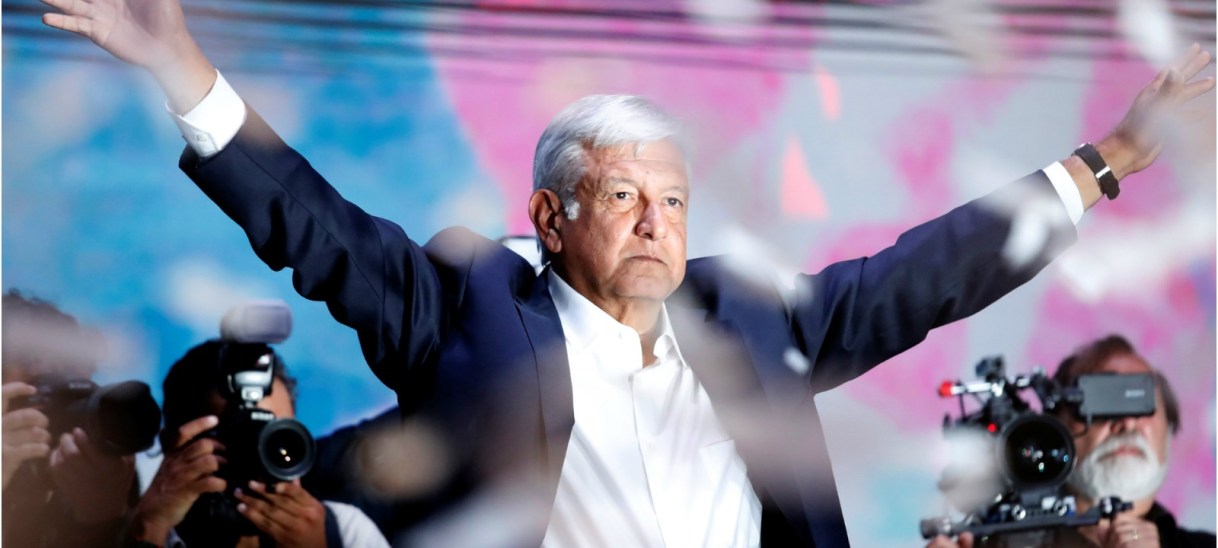
El triunfo de Andrés Manuel López Obrador, el presidente electo de México en la reciente elección presidencial obtuvo un histórico resultado de 53% de los votos, según indican las cifras oficiales emitidas por el Instituto Nacional Electoral (INE), institución pública y autónoma encargada de la organización de las elecciones y que es dirigida por ciudadanos con la participación y representación de todas las fuerzas políticas del país. Sin duda alguna, tanto el resultado y la institución por si misma son un síntoma positivo de una democracia que sigue latiendo.

Ningún otro presidente mexicano había sido electo en un contexto histórico como el que se presentó el pasado 1 de julio en la jornada electoral, López Obrador es el primer presidente mexicano de la era de la transición democrática con el mayor porcentaje de votos, con más de 30 millones de los más de 56 millones que ejercieron su derecho al voto.

Una jornada con alta participación tan solo superada por la del año 2000, cuando resultó electo Vicente Fox, el primer presidente emanado del Partido Acción Nacional (PAN) y el primero de la transición democrática que puso fin a más de 70 años del viejo régimen del Partido Revolucionario Institucional (PRI).

La democracia mexicana ha cumplido dieciocho años, y con ello su mayoría de edad si tomamos en cuenta la semejanza de que en México los ciudadanos obtienen su credencial de elector a esa edad. Sin embargo, esta joven democracia tuvo un recorrido de experiencias significativas y algunas dolorosas en las décadas que precedieron a su nacimiento.

Por mencionar algunos ejemplos como la creación del PAN en 1939, el partido más importante de oposición al viejo régimen del PRI, pasando por el traumático 2 de octubre de 1968 y el nacimiento de una generación de políticos que en aquel entonces eran estudiantes universitarios cuando sucedió la matanza de Tlatelolco en la Plaza de las Tres Culturas.

También es importante señalar lo que algunos estudiosos y analistas reconocen como el inicio de la transición democrática con la reforma político electoral del año 1977, cuando desde el poder presidencial, todavía en el viejo régimen priista se promovió pasar de un esquema hegemónico controlado por el PRI-Gobierno a uno pluripartidista, que incluso dio cabida a los partidos de izquierda proscritos hasta ese entonces.

Todas estas anécdotas que más bien parecerían dignas de una historia de hazañas de mujeres y hombres con nombres y apellidos que dieron testimonio de un férreo compromiso por democratizar el poder y dotar de instituciones al país, son parte de una historia que en si misma es valiosa no solo por la profundidad de los cambios que generaron, sino porque sin ellas no podríamos comprender que hoy el primer presidente emanado de un partido-movimiento abiertamente de izquierda haya llegado al poder con tan amplio margen y con una legitimidad inusual.

A pesar de que, por joven e incipiente para algunos sea la democracia que tenemos los mexicanos, es importante conocer, comprender y valorar que los cambios que los ciudadanos seguimos anhelando pueden ser canalizados por medio del voto, como ya lo demostró la elección reciente, y que las instituciones como el INE generan la confianza necesaria para que la voluntad ciudadana exprese en las urnas sus sueños, anhelos y frustraciones con respecto al poder y quienes lo buscan conquistar.

Dos son los elementos característicos para tener una democracia fuerte, según señalan en el libro How Democracies die los profesores de la Universidad de Harvard Steven Levitsky y Daniel Ziblatt. El primer elemento es la edad, la antigüedad de la democracia en un país, y el segundo elemento tiene que ver con cómo está distribuida la riqueza.

A diferencia de las personas, los años y la edad avanzada garantizan la prolongación de la vida de una democracia, pues las experiencias que viven las distintas generaciones de ciudadanos, los hitos que suscitan van construyendo instituciones cada vez más resilientes.

En términos sistémicos la vejez ayuda a la democracia, mientras que, por el contrario, la aparición de amenazas a la democracia en una edad temprana por parte de tendencias y líderes autoritarios pueden “erosionarla” e incluso llevarla a su muerte prematura.

Por otro, el fenómeno de la inequidad en las oportunidades, la injusta distribución de la riqueza y el deterioro de la calidad de vida de los ciudadanos son amenazas a la resiliencia de una democracia, pues, aunque la economía es una esfera de la actividad humana distinta a la de la política, esta termina por determinar de manera importante las preferencias, opiniones y percepciones sobre la forma en cómo vivimos en la esfera de la política. Así que mientras las opciones políticas existentes puedan responder mejor a las exigencias de los ciudadanos en este sentido, más sano será para la prolongación de una vida sana para la democracia.

México tiene ante sí un reto y una oportunidad. El reto consiste en evitar a toda costa la erosión de su democracia que apenas madura, que con una corta edad ha demostrado resistir los embates de tendencias autoritarias en el pasado, y la cada vez más creciente desigualdad, pobreza y marginación de más de la mitad de su población.

La oportunidad estriba en aprovechar el resurgimiento de una especie de “bono democrático” que los mexicanos hicieron posible al usar la democracia y sus instrumentos para decidir un cambio de rumbo, una exigencia para nada despreciable por la cantidad de votantes que así lo dejaron claro.

En ambos casos, el reto y la oportunidad, corresponde, por una parte al nuevo gobierno reconocer el camino que han recorrido tanto ellos como sus adversarios políticos a lo largo de las décadas para construir un ambiente democrático y de instituciones más o menos sólidas, y por otro lado le corresponde a la oposición política de todo el espectro político y a la sociedad civil ser lo garantes del fortalecimiento de la democracia a través de hacerse corresponsables en la atención a los problemas más graves y urgentes que aquejan al país: pobreza, desigualdad, inseguridad, impunidad y la corrupción; así como ser los canales para fomentar, fortalecer y promover la participación ciudadana eficaz en los asuntos públicos, y en caso de ser necesario, servir de diques a las tentaciones autoritarias de quienes llegan al poder en todos los niveles de gobierno, de todos los partidos políticos de donde provengan esos gobernantes y servidores públicos.

Salvar la democracia es tarea continua, pues no podemos dar por sentado que nunca está amenazada o en riesgo de ser erosionada, ejemplos en la historia, a lo largo y ancho del mundo nos señalan que cuando menos se le piensa, un golpe de estado puede suceder o un líder electo democráticamente socavar las instituciones y las libertades.

No importa si es con tanques o con una versión “suave” del desmantelamiento de la democracia, «Nadie nos va a regalar la democracia, la democracia necesita demócratas y demócratas son los que se toman el trabajo de construir los instrumentos e instituciones que favorecen a la democracia«, dijo Carlos Castillo Peraza, periodista, político y pensador humanista mexicano. Los ciudadanos, la sociedad civil, los partidos políticos y gobiernos, todos somos necesarios para darle viabilidad a quien este año llegó a la mayoría de edad: el México democrático.

The Surprising Promise of the Trump-Putin Summit

The Real Opportunity Behind the Media Spectacle


Historic U.S.-Russian meetings tend to occur outside of Washington and Moscow. Franklin Delano Roosevelt first encountered Joseph Stalin in Tehran. At the end of World War II, they met again at Yalta, a name that would thereafter signify Soviet domination of Eastern Europe. Harry Truman’s one and only meeting with Stalin was in Potsdam, a suburb of Berlin. John F. Kennedy had a shaky meeting with Nikita Khrushchev in Geneva, while Ronald Reagan had a memorable collision with Mikhail Gorbachev in Reykjavik.

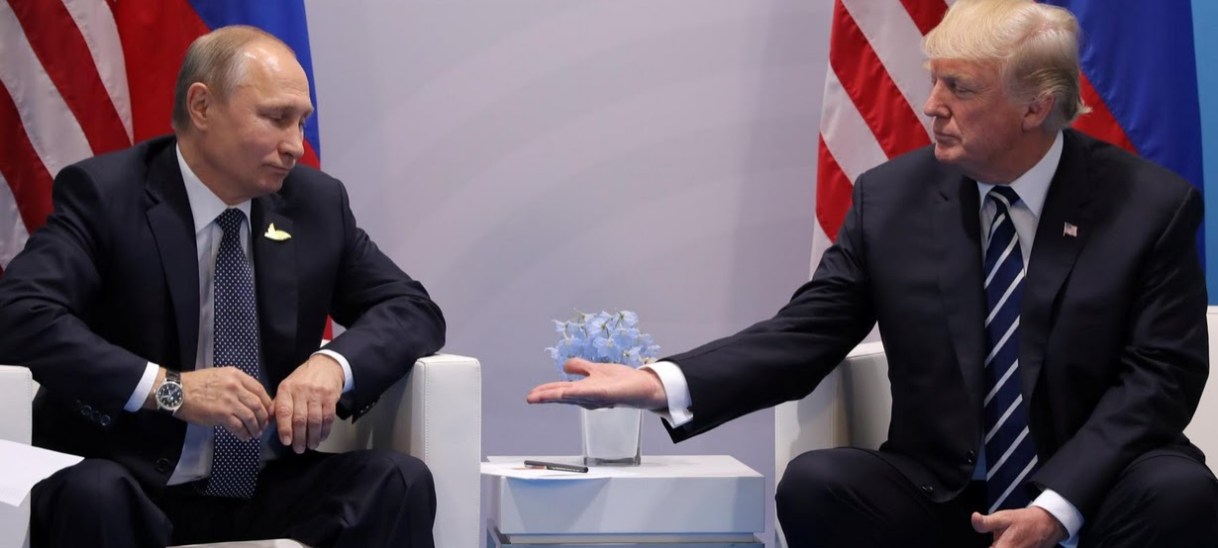
U.S. President Donald Trump and Russian President Vladimir Putin will meet for a frenetically anticipated summit on July 16 in Helsinki. Their encounter—coming amid cascading revelations of Russian interference in the 2016 presidential election, unnerving questions about Trump’s admiration for his Russian counterpart, and U.S.-Russian tensions around the globe—is certain to be a media spectacle. But as its location subtly implies, the real importance of the meeting may have little to do with the theatrics at the top. Unglamorous, largely unnoticed diplomatic processes could prove more consequential. In Helsinki in 1975, the United States, the Soviet Union, and various European powers devised a security architecture for Europe that was controversial at the time but ultimately crucial to the Cold War’s peaceful end. Without the Helsinki Accords, which fostered agreement on Europe’s borders and enshrined a nominal commitment to human rights in the Eastern bloc, the revolutions of 1989 may never have come and almost certainly would not have been as peaceful as they were.

The lessons of that previous U.S.-Russian encounter in Helsinki are worth remembering now. The agreement that resulted involved years of drab, painstaking diplomacy. It required agonizing compromise on both sides. It rested on work rather than optics. Under the shadow of low expectations, a difficult process preceded final success. The summit’s real importance, in other words, had little to do with momentary media spectacle. The same could be true of next week’s Trump-Putin meeting. No matter the sensational headlines in the summit’s immediate aftermath, a quiet yet substantive diplomatic process has the potential to yield real, and welcome, results.

THE RIGHT KIND OF SUMMIT

At a rally last week, Trump dismissed concerns about his meeting with the Russian president, saying, “Putin’s fine.” This generated a ripple of headlines. Russian television, meanwhile, is awash in speculation about Putin’s potential achievements in Helsinki. American observers rightly fear the impact of stray words from Trump and potential strategic missteps that could flow from the very melodrama of the event itself. To many, the optics are the story, and the optics can only be wrong: Putin standing shoulder to shoulder with an American president under investigation for subversive ties to Russia, uncertain about the NATO alliance, and enamored of the deals or pseudo-deals that emerge from a welter of exaggerated expectations.

An age of social media is prone to framing politics in cinematic terms. A troubled meme waiting to happen, the Trump-Putin summit wonderfully suits the age. The problem, however, is not a meeting as such but the real possibility of holding the wrong meeting. A summit that involves up-front U.S. concessions for the sake of some ill-defined triumph would be worse than a missed opportunity.

Consider the last high-profile U.S. summit with North Korea. Trump clearly oversold his June meeting with North Korean leader Kim Jong Un. What was billed as the chance to ratify denuclearization for the entire Korean Peninsula ended up being a noncommittal meeting between two heads of state. North Korean conduct since the summit shows that it is undeterred. In time, the personal relationship between Kim and Trump may prove an asset, but only a long, detailed process of negotiation and verification can ensure that North Korea has given up its nuclear weapons. The summit in Singapore was merely the beginning of the journey.

So, too, will the Trump-Putin meeting be a beginning. It cannot guarantee much in and of itself. Over the past few years, the United States and Russia have let their diplomatic relationship erode. A Russian-U.S. presidential summit has not been held for the past eight years. One would have to scrutinize the annals of Cold War history to find a period when there has been so little diplomatic contact. The list of differences and grievances on both sides is endless, as the U.S. Congress will remind the president should he offer Russia anything that touches either on sanctions or on U.S. treaty commitments.

This is why the history behind Helsinki could be a road map for the Trump administration. Trump’s meeting with Putin should be used to create a framework for diplomatic engagement and for process. U.S.-Russian working groups should be embedded in the State Department and the Pentagon, along with bipartisan working groups in the U.S. Congress. Other working groups to the side of government should be encouraged and given the U.S. government’s material support.

Ukraine and Syria are the two most urgent problem sets. On the former, diplomacy has stalled. France, the United Kingdom, and the United States appear to be consumed with other problems. Talks with Russia on the core issues behind the Minsk agreements—a cease-fire, a restoration of Ukrainian sovereignty, a workable political order in the Donbas region of eEastern Ukraine—might stimulate the Western appetite for leadership. With the rebels surrendering, President Bashar al-Assad’s Syria will be taking on a new form, the volatility of which could provoke a war between Iran and Israel. This is an outcome Russia and the United States would both want to avoid. They should be looking ahead in consultation with each other. U.S. leverage over Israel and Russian leverage over Iran is incomplete, but a basic degree of coordination would certainly help prevent conflict. Addressing these dilemmas should not be deferred to 2020 or 2024. Arms control, counterterrorism, the Arctic, and space are other issues that deserve real bilateral attention. Low-key discussions out of the public eye have modest potential, and the Russian and U.S. presidents could give these discussions a preliminary blessing in Helsinki.

In an ideal world, Trump would raise the issue of election interference one-on-one with Putin. Those U.S. officials who join Trump at other meetings would do the same. No less important, Trump would make an emphatic public statement about Russian meddling while together with Putin, as French President Emmanuel Macron has done at comparable moments. Putin will deny the meddling, and Trump should neither accept this denial, as he has in the past, nor make an official acknowledgment from Putin a precondition for moving forward. The confession will never come, but raising the issue with clarity and without embarrassment would convey American resolve and a willingness to respond. If Trump waffles on the issue in Helsinki, however, Russia will score a propaganda victory and will likely be emboldened to test further what redline, if any, the administration has on meddling.

BORING IS BETTER

Trump has a proverbial attachment to hype. But his administration should do what it can to undersell the summit with Putin and avoid painting it as a breakthrough before or after. Instead, it should pay tribute to the years of irritating and boring diplomacy that generated the Helsinki Accords. Internally, the administration should prepare for the follow-up to the summit—the gradual normalization of diplomatic ties between the two powers whose relationship is integral to the future of Europe and the Middle East. A nonrelationship with Russia is simply not in the U.S. national interest.

Once in place, a normalized U.S.-Russian diplomatic relationship should be Washington’s vehicle for shaping Russian behavior. The United States cannot coerce Russia into doing its will. In Ukraine and Syria, Washington has attempted to isolate Russia, hoping that Putin will meet U.S. demands so he can come in from the cold. Sanctions are forms of economic isolation designed to have a similar effect. So far, coercion and isolation have both failed. Russian foreign policy has grown only more ambitious since 2014. Moreover, daily images of the joyful World Cup in Russia underscore the absurdity of trying to isolate the country in the manner intended. What cannot be done should not be attempted.

Continued pressure where interests diverge plus diplomatic normalization would be a new approach for the United States. If it fails, the pressure can always be increased. Progress, if achieved, would be incremental.

Once the summit is over, the president will likely shift his attention elsewhere, as he seems to have done after his meeting with Kim. A trade war with China and the U.S. congressional midterm elections may be more engrossing than election modalities in the Donbas or the dynamics of regional competition in Syria. Handing off the job of negotiating with Moscow to Secretary of State Mike Pompeo, Secretary of Defense James Mattis, and National Security Adviser John Bolton would be the logical next step. These are all Russia hawks who could exploit the face-saving potential for Putin of Trump’s rhetorical friendliness toward Russia and of Trump’s relative popularity in Russia while working toward normalizing relations. Pompeo, Mattis, and Bolton would not sell out Europe for an elusive quid pro quo in Syria; but they could be tasked to reverse the downward spiral of the U.S.-Russian relationship. This in turn could open up new options in Ukraine and Syria, options the United States might be happy to have.

To succeed, though, this approach would have to employ the self-discipline, patience, and attention to detail demonstrated nearly 45 years ago in the austere Scandinavian city of Helsinki.

Publicado en: https://www.foreignaffairs.com/articles/russian-federation/2018-07-11/surprising-promise-trump-putin-summit?cid=nlc-fa_fatoday-20180713